Why “Just Practice” is Bad Art Advice (And What to Do Instead)
The Most Annoying Thing To Hear As An Artist
You’ve heard this advice a million times:
“Just practice your art and you’ll get better!”
It’s so hard not to roll my eyes when I hear one of these phrases. Because come on… no one wants to hear that.
As an artist, I’ve EASILY heard this advice more than any other piece of guidance out there. And my take? That’s not helpful at all.
Here’s why: “Just practice” is vague.
What does “practice” mean, exactly? What qualifies as practice?
The problem isn’t that you don’t WANT to do the work, but you’re left wondering what to practice, how to practice, or even if what you’re doing counts as practice. So you end up spinning your wheels, spending time in your sketchbook and wondering if you’re actually getting better or just going through the motions. Or the decision fatigue of “what do I draw?” is too exhausting, so you sigh and set down your sketchbook for something frictionless (like doom scrolling).
I spent years doing this. I’d sit down to draw, but without a clear intention, it starting felt impossible. Was I supposed to be working on something specific? Is what I’m doing even getting me anywhere? The ambiguity was exhausting, and honestly, it killed my motivation more than once.
The truth is, practice is necessary to grow as an artist. You have to put in the work to get the rough stuff out of your system before you begin to refine your techniques and style. No amount of theory can replace rolling up your sleeves for some good old fashioned practice, but “practice” isn’t one-size-fits-all.
There are different types of practice, and each one serves a different purpose in your artistic journey. Once I understood this, everything became so much more clear and practice became easier overnight.
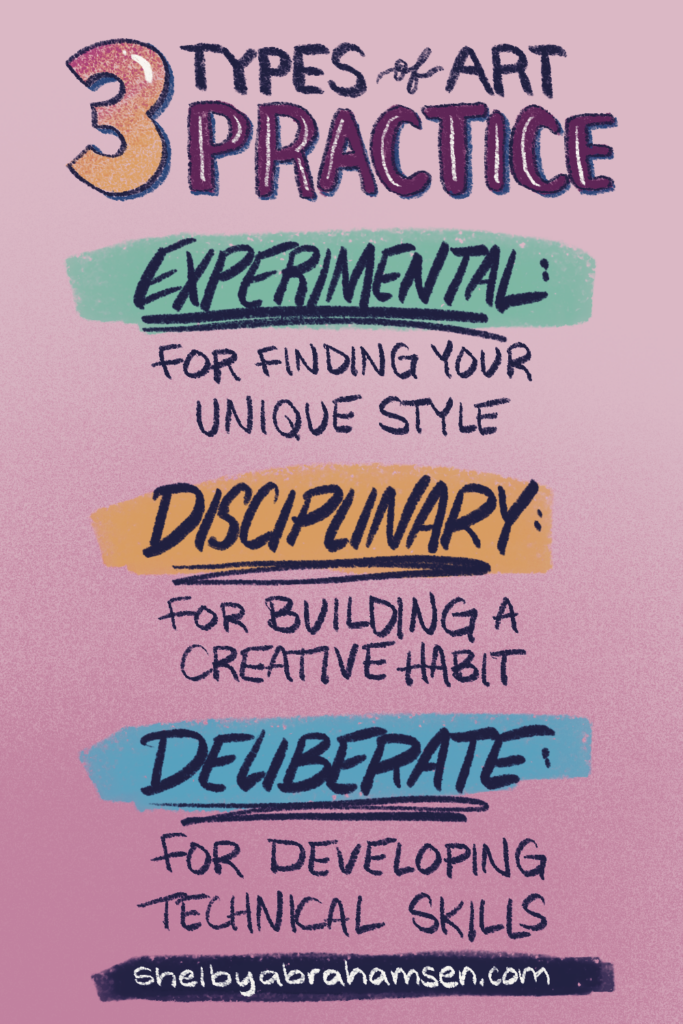
The Three Types of Practice
All art making is practice, but sometimes you want something with a bit more intentionality to help you achieve your art goals. Breaking down the different types of practice makes it a lot easier to identify what exactly your next steps are and removes ambiguity.
1. Experimental Practice
Do you feel blocked into a certain style, medium, or subject? Are you stuck in a rut and need something to snap you out of it? You might want to try experimental practice.
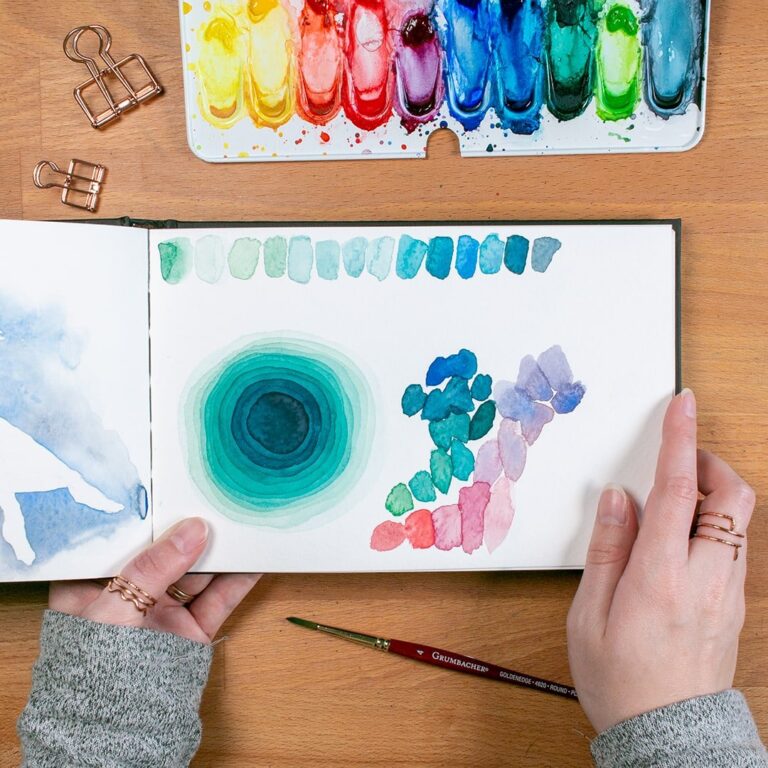
This is the type of practice where you’re playing, exploring, and pushing yourself outside your comfort zone. You’re trying new mediums you’ve never touched before—maybe gouache when you’ve only ever used acrylics, or sculpting when you’ve spent your whole artistic life drawing. You’re testing new techniques, new materials, new styles. The goal isn’t perfection; it’s discovery.
Experimental practice is where you’ll find your style. It’s messy, it’s playful, and it doesn’t have to result in a “finished” piece. Some of my best ideas have come from an hour of just messing around with a new medium or technique. And in that exploration, you’ll discover your own preferences, patterns, and interests that ultimately culminate in your unique artistic style.
2. Disciplinary Practice
Do you want to make art a regular part of your life, but you can never seem to find the time? You need disciplinary practice.
This is the practice where you build consistency. It’s the daily habit. We’re not looking to make masterpieces here—it doesn’t have to be glamorous or result-focused. You just need to show up for your creative self and build a cadence, a rhythm that you can rely on.
Disciplinary practice can be as simple as doodling in the margins of your planner. It could be a quick sketch of your outfit for the day, or a drawing of your pets. Some days it’s just brainstorming ideas for future projects in your sketchbook—no actual drawing involved.
Once again, we’re not looking for perfection here. We’re only focused on showing up and making an effort. This type of practice is not always easy, but every day you try, you’re making it easier and easier to make creativity a habit.
Think of it like eating; some meals are lavish, elaborate, and fancy, but some days you’re just getting food in your system to stay nourished and keep yourself going.
3. Deliberate Practice
At last, we come to the type of practice that grows your technical skills brick by brick.
This is the focused, goal-oriented practice. You’re targeting a specific skill you want to improve. Maybe you’re trying to learn perspective, hands, or color theory. You’re studying references, copying master artists’ work, or taking a class where an instructor walks you through the fundamentals.
Deliberate practice is somewhat structured and very intentional. You know exactly what you’re working on and why. It’s like doing math problems to strengthen your understanding of a concept—you’re drilling a specific skill so you can apply it later.
Your Turn: Map Out How to Practice Your Art
Now we’ve explored the three types of practice, it’s time to get intentional about your practice routine.
Here’s what I want you to do:
Open your sketchbook to the first or last page (to easily find it later) and create three sections. Label them: Experimental Practice, Deliberate Practice, and Disciplinary Practice. Under each section, brainstorm some ideas that match your current goals and energy levels.
Here’s what this might look like:
Experimental Practice: What mediums, subjects, or techniques are you curious about but haven’t explored much? (Example: gouache, sculpting, acrylics)
Disciplinary Practice: What can you do daily that feels comfortable and doable? (Example: doodles in your planner, drawing your favorite subject matter, quick outfit sketches, sketching your pet)
Deliberate Practice: What specific skills do you want to improve? (Example: perspective, hands, animals, architecture, color mixing, color theory)
Once you’ve listed these out, you’ll have a clear roadmap for how to practice your art. Anytime you find yourself staring at a blank page with no idea how to proceed, just flip to that page with all your ideas and assess. How much time do you have? Are you feeling like experimenting with new stuff or staying in your comfort zone?
Keeping your ideas on hand in your sketchbook makes it a lot easier to choose your next move and make your practice actually count. If you, like me, keep multiple sketchbooks and never know which one you’ll draw in next, then simply take a photo on your phone and favorite it so it’s easy to find later!
No more ambiguity. No more wondering. Just clear, actionable options that truly push your further.
Ready to Go Deeper?
Understanding the different types of practice is a great start, but if you’re struggling to figure out what your practice should look like for you specifically, I get it. Your creative journey is unique, and sometimes you need a bit of personalized guidance to find clarity.
That’s where a little bit of coaching can go a long way. I offer one-on-one coaching sessions where we can dig into your specific challenges, goals, and creative journey. Whether you’re stuck in a creative rut, struggling to find time for art, or unsure how to build consistency into your practice, I’m here to help you create a plan that actually works for your life.
I also teach art classes on Foxsy that go beyond just technical skills. We dive into the soft skills that matter just as much—finding time for art, building consistency, overcoming self-doubt, and creating a sustainable creative practice. These classes help you become not just a better artist technically, but a more confident and consistent one.
What Practice Actually Does For You
Practice becomes so much more meaningful when you understand why you’re practicing. You don’t have to do all three types every single day. Some weeks, you might focus more on deliberate practice because you’re working toward a specific skill. Other weeks, experimental practice might be your jam because you feel called to play and explore. Sometimes, it’s all you can do to keep up with disciplinary practice by drawing on a sticky note.
Listen to what your art practice needs. Give yourself permission to practice in the way that makes sense for where you are right now, and give yourself the grace to flex as your life throws new challenges at you.
And remember—all of it counts. The doodles, the experiments, the focused drills. It’s all adds up to an amazing creative life that enriches you and keeps you moving forward. So don’t give up, and don’t discount yourself. You’re doing better than you think.